|
Flooding, Drafting & Brigham's Big Organ (1863) |
|
Saturday, August 29, 1863
The date of the next global deluge is scientifically determined, Brigham Young’s monstrous organ is described in detail, callous behavior in Calais, skedaddling conscripts, and a "strictly sexual" camp-meeting.
5,860 Years To Go
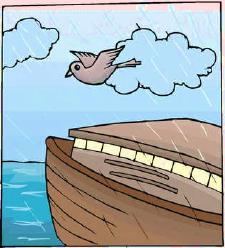
A French work, recently published, maintains that every 10,500 years the waters of the sea pass from one pole to the other, submerging and overwhelming in their passage the earth and all its inhabitants. According to the author of this theory the last of these deluges occurred 4500 years ago, and the next one is due in 6000 years.
Brigham Young's Monstrous Organ
A Boston firm have (sic) recently executed an order from Brigham Young for one of the largest organs in the country, to be erected in the great Mormon Tabernacle at Salt Lake City, which building will seat 15,000 people. Owing to the great cost of transportation, the case of the organ, and the 16 and 32 feet diapasons, are to be made and finished in the building under the supervision of a skillful workman, now en route.
Conscripts, Substitutes, & Skedaddlers
The engrossing topic of local interest, in this city and vicinity, this week, is the examination of drafted men; and their exemption, commutation, or sending of substitutes. But very few of the drafted appear to be entering the service themselves, "except by their agents"; and the price of substitutes is about $150, besides the city bounty of $300 per man.
Nearly all the substitutes are strangers - most of them - Canadians and Irish chiefly, being furnished by Boston brokers, at a good round profit, no doubt; and some of the chaps, perhaps, intend to skedaddle if opportunity offers.
Many conscripts have been foolish enough to pay their substitutes, in advance of their being mustered into the service, not only the $100 or $200 bonus, but also the $300 which the city will not pay until ten days after the mustering in, and of course will not pay at all if the substitute runs away.
The substitutes are quartered at Jefferson Hall, under a strong military guard. About twenty were taken to Concord and mustered into service, on Wednesday morning; and squads will be sent daily or oftener. Two substitutes deserted, one of whom was captured, but the other cannot be found. A soldier, said not to be quite sober, who went with him to a barber's, allowed the substitute to go out a minute, and he hasn't been seen since! So that unlucky conscript, his principal, must whistle for his $300, - he having paid $400 in advance for his substitute, - unless he can find the skedaddler. Certainly no substitute ought to receive the city bounty till the city pays it; and if he is an honest, worthy man, he will not demand it. Look out for those who do.
He's Only Dead in the Papers
The Manchester American states that Capt. Sanborn, of the 16th regiment didn't die - except in the newspapers. He is ill at his residence in Franklin, but hopes to recover.
He's Safe Now
A man in St. Louis put his head in a pail of water and drowned himself to avoid conscription.
Jackass Drafted
By a trick upon a smart enrolling officer of Maryland a jackass was enrolled as "Billy Bray," and stands now on the list of drafted men forming the quota of Maryland.
Of No Use
One poor fellow drafted down in Maine was exempted because, as the Provost Marshal's advertisement said, he was "good for nothing."
S.U.I.
A Kittery correspondent informs us that a boat was upset near the Navy Yard, Monday night at 10 o'clock, in the act of jibing, and three sailors were spilt into the water, having been ashore where something stronger was sold and drunk. Sober men from a vessel near by, put out in a boat and picked up the men. Our correspondent mourns over the fact that many men spend their earnings in the dens of drunkenness and vice; and over the other fact that such dens exist on both sides of the river.
Some Choice
While anxiously watching the patched-up rigging over the jolting road, we could but think of the traveller who asked the backwoodsman which of two paths, from a fork, he had better take; and the reply, that "if he went this way, before he got through he would think he was on the road to the devil; and if he went that way, he'd wish he'd taken t'other road."
The Lost Printer
MR. JAMES MITCHELL, of the 16th N.H. Regt., whose death at Vicksburg hospital we sadly chronicled yesterday, was a printer, having been for several years employed in this Chronicle office; and was an industrious, capable, and highly esteemed young man. From his very boyhood he was in our employ - first as carrier, then as apprentice - he having, we think, worked for any other employer; and his loss seems to us like that of one of our own kin. Peace to his memory!
Unprecedented Scene
A recent drive to Exeter, and thence though Newmarket home, showed us more women and girls at work in the hay fields than we had ever seen before, probably in the whole course of our life. Another result of the war, as of all wars - and in itself considered, not at all a sad one.
Saturday, August 29, 1863
Subscribe to the NH Gazette
Please visit these SeacoastNH.com ad partners.