|
FRESH STUFF DAILY
|


|
|
||
|
|
||
|
|
||
|
SEE ALL SIGNED BOOKS by J. Dennis Robinson click here |
||
Connie Small, wife of Keeper Elson Small and author of the book The Lighthouse Keeper’s Wife, says she and her husband enjoyed filling in for regular keepers at the Nubble. But they felt like fish in a fishbowl when they went about their business -- carefully watched by binocular-wielding tourists across the narrow channel at Sohier Park.
The Nubble keepers used a bucket suspended on a line across the channel to transport supplies. One Coast Guard keeper in the 1960s actually put his child in the contraption to send him on his way to school each day. When the district commander saw a picture of the boy in the bucket in a Boston paper, arrangements were made for the child to board on the mainland during the week.
Please visit these SeacoastNH.com ad partners.








News about Portsmouth from Fosters.com |



 York, ME
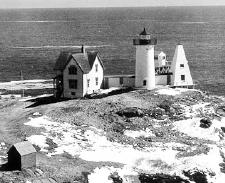 One early keeper, William Brooks, took advantage of the public’s desire to see
the Nubble up-close by ferrying sightseers to the island for ten cents apiece.
He soon lost his job, and later ran a hotel at York Beach called the Bay View.
One early keeper, William Brooks, took advantage of the public’s desire to see
the Nubble up-close by ferrying sightseers to the island for ten cents apiece.
He soon lost his job, and later ran a hotel at York Beach called the Bay View.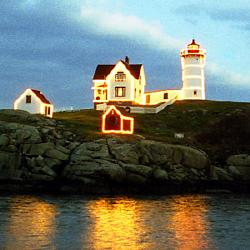 The scene here is far from static; weather and sea conditions provide an endless
variety of moods. And be sure to visit near Christmas when the buildings are strung
with sparkling lights.
The scene here is far from static; weather and sea conditions provide an endless
variety of moods. And be sure to visit near Christmas when the buildings are strung
with sparkling lights.

|
| Saturday, April 20, 2024 |








|
Copyright ® 1996-2020 SeacoastNH.com. All rights reserved. Privacy Statement
Site maintained by ad-cetera graphics